


Heather’s Pick: Ticket to Ride New York
Ticket to Ride New York is a much, much quicker version of the Ticket to Ride series. Created by Alan R. Moon and published by Days of Wonder, this 2018 small box edition utilizes the same rules as the original. Players race to collect cards and claim Manhattan routes, connecting their destinations and taking in breathtaking landmarks along the way. Taking only 10-15 minutes to play, this 2-4 player Taxi themed game was Heather’s most pleasant surprise of 2018.
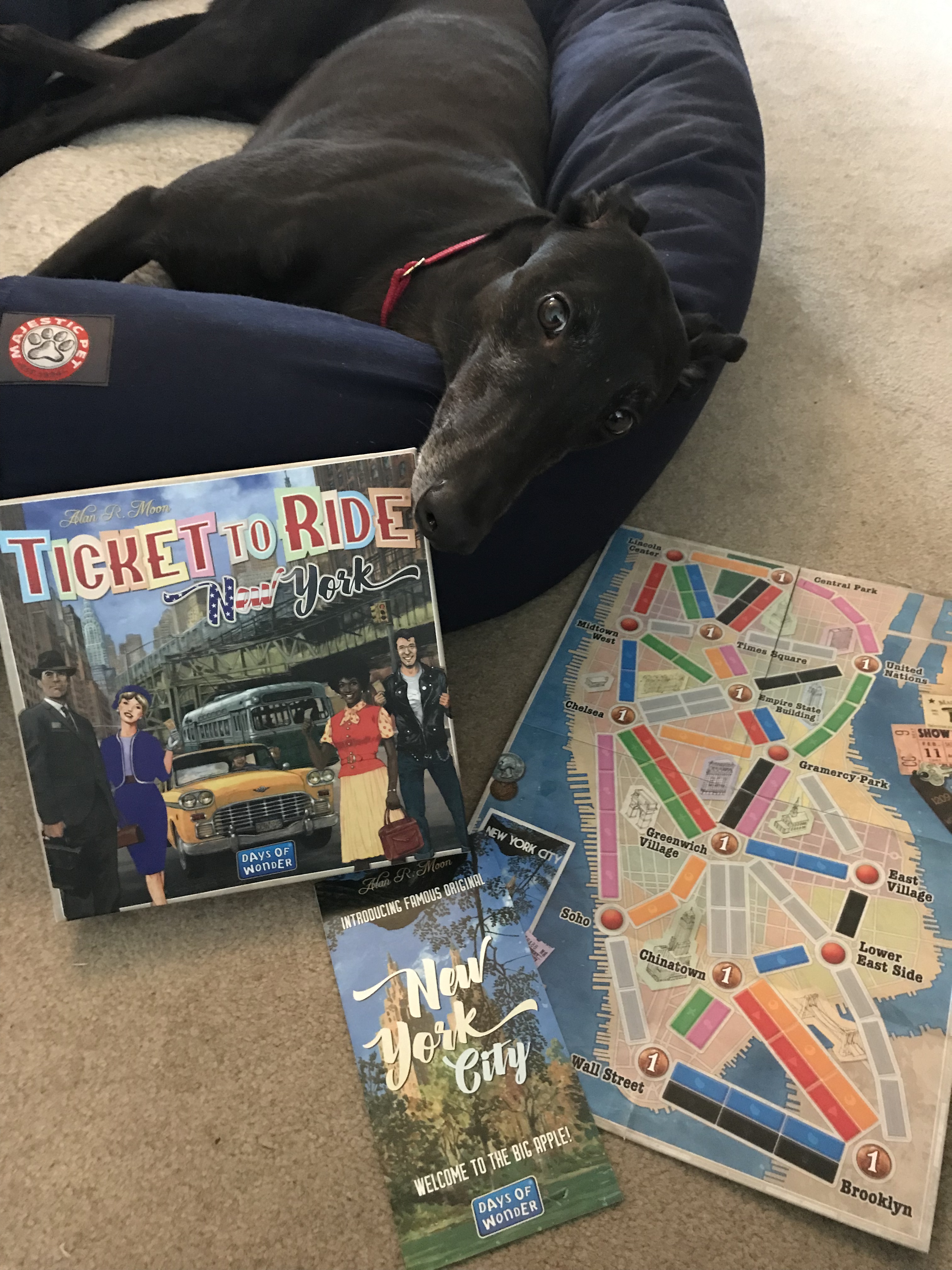
How to Play
Players start with two transportation cards in their hand and the remaining cards make a draw deck. The first five cards of the draw deck are revealed and placed beside the board. If at any point during the game, there are three or more taxi cards visible in this area, the cards are discarded and five more revealed. Players are then given two Destination cards and may choose to keep one or both goals. All cards are kept secret from other players.
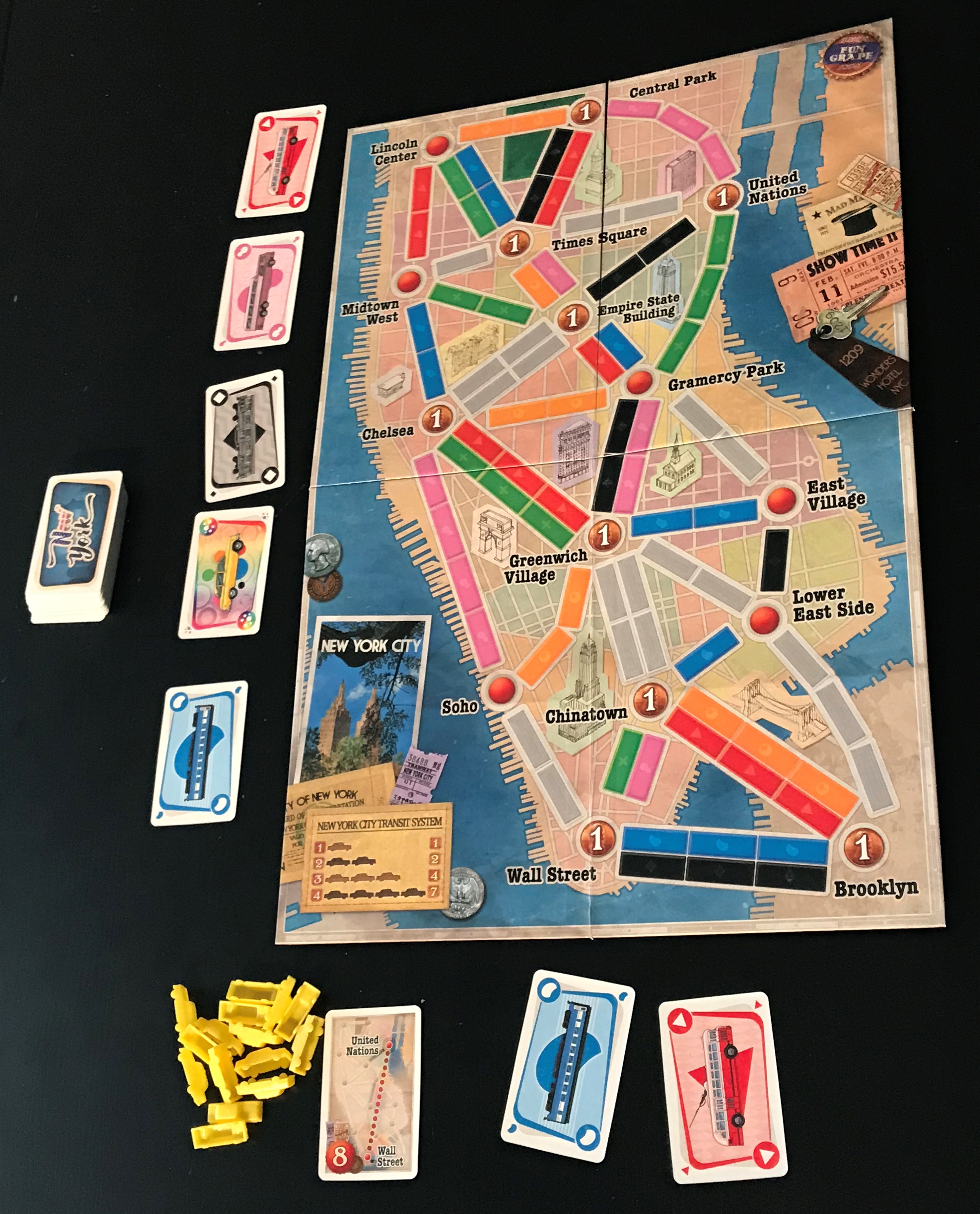
In this version players score points by completing routes on their destination cards, each leg of the route that connects two locations on the board, and connecting tourist attractions. Players lose points for destinations they do not complete.
On their turn, players have three options:
- Draw Transportation Cards: Players may draw cards from the draw deck or choose from the five face up ones, immediately replacing it with a new card from the draw deck. Players draw two cards, unless they choose to take a taxi (wild) one first. Players may draw from both locations and have no hand limit.
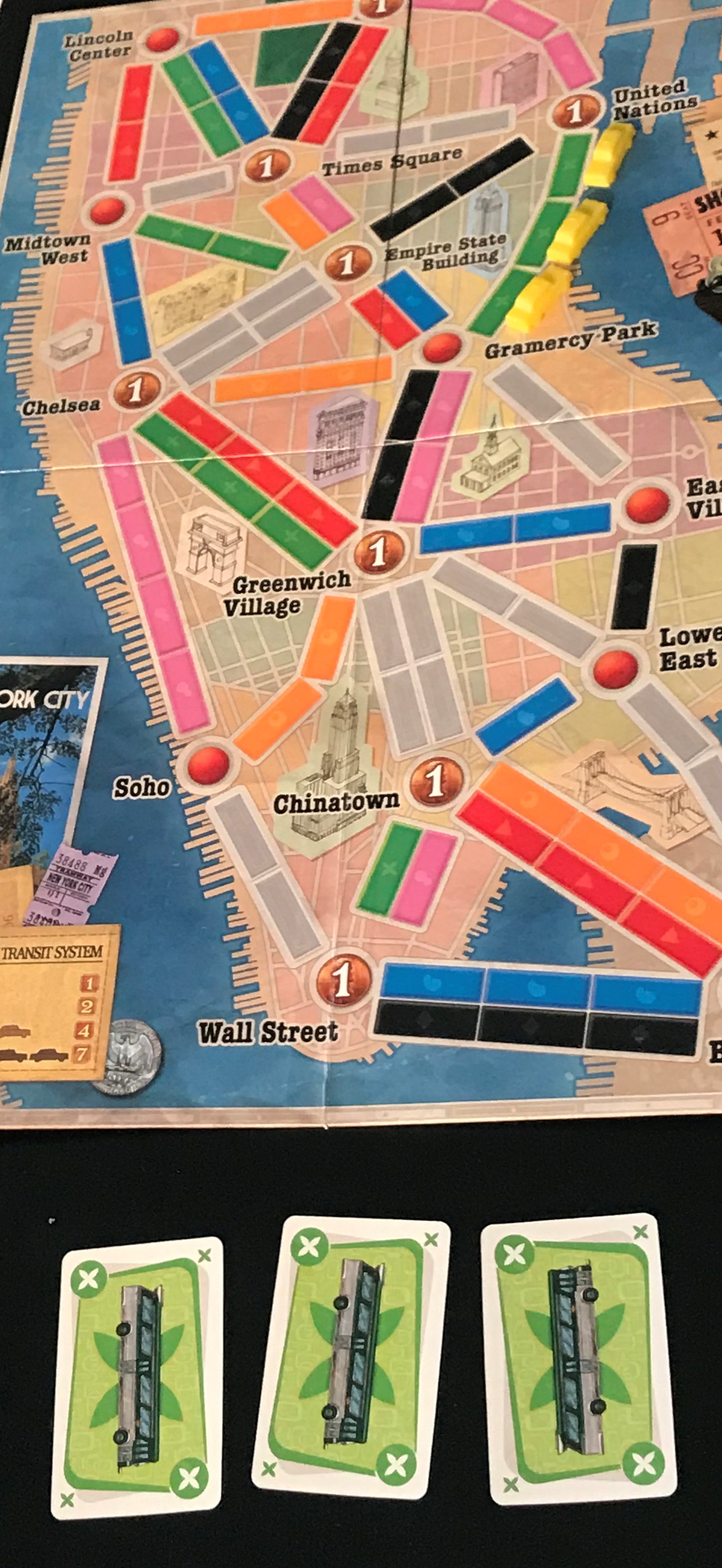
2. Claim a Route: If a player has the correct number of cards in the correct color and enough taxis to place on the route, they may discard those cards to claim the route. The route can be anywhere on the board and does not need to connect to any of their previously claimed spaces. The board indicates what color cards must be discarded to claim each route (blue for blue, pink for pink, etc.) with the exception of grey, where the players can play a set of cards of any one color. Players may turn in a combination of the matching color and/or wild taxi cards to claim the route. Players may never claim both sides of a Double Route.
3. Draw Destination Tickets: Destination tickets show two locations and the number of points received if completed or lost if not completed. Players must claim routes, making a continuous path between the two locations. A player may draw two more destination cards from the deck and choose to keep one or both destinations.
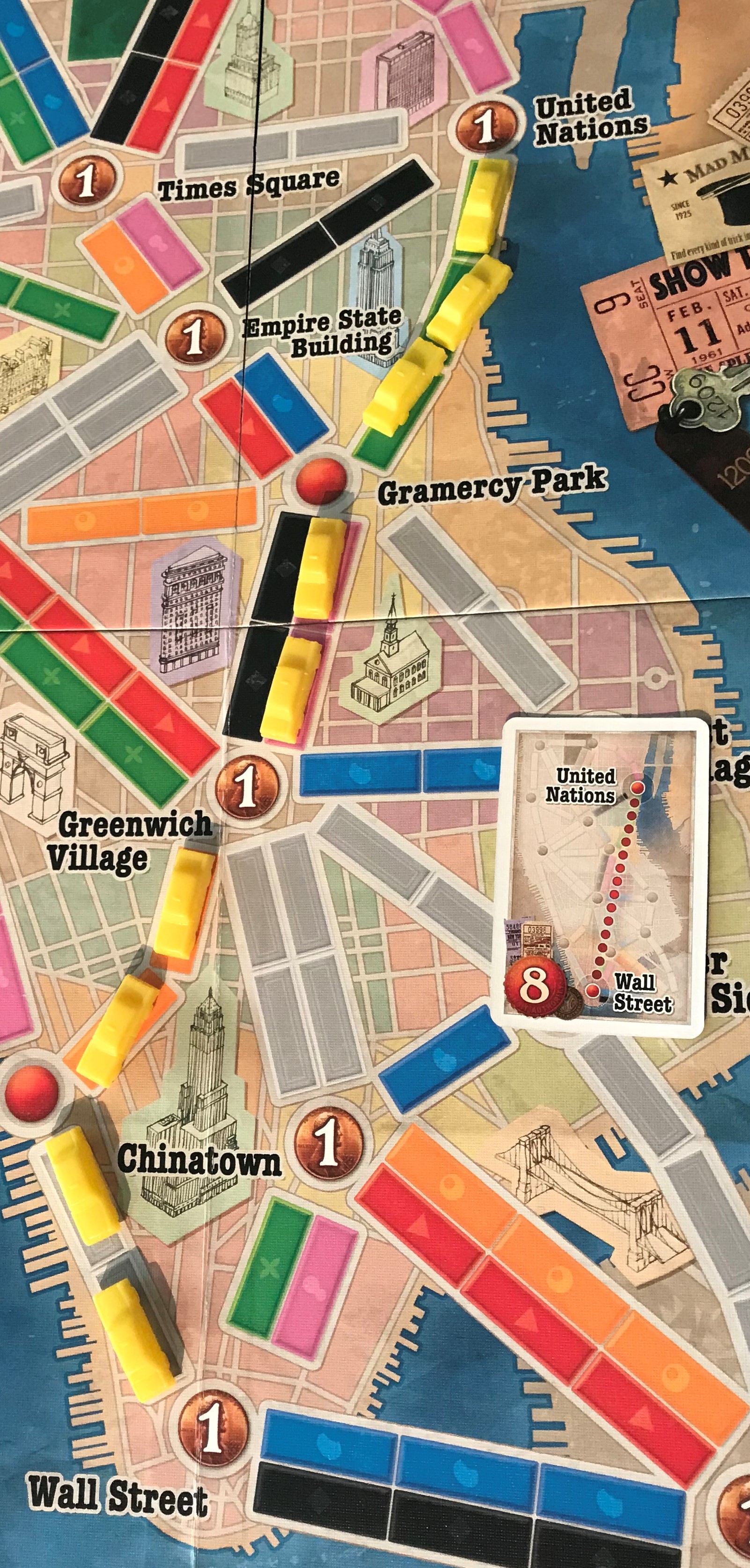
When any of the player has two or less Taxi pawns left in their supply, every player takes one last turn. Players than tally their points and the highest scoring player wins.
- Points earned or lost by completing or failing to complete Destination Cards. Point value is on the cards.
- Each Route claimed has a point value indicated on the bottom left corner of the board. Add up all routes claimed.
- One point for each tourist attraction connected by one or more routes claimed.
Review
I want to start by saying I do see the appeal of the original Ticket to Ride. It is a great gateway game that has helped many people discover the joy of modern board games. I own a copy, have taught it a few times, and even purchased a copy of My First Journey for my nephew.
This being said, I have never fully enjoyed the game due to its long playtime. I love the concept, the ease of teaching it, and the mechanics, but the game always feels sluggish. With a playtime of thirty to sixty minutes, players spend the majority of the time plodding across the board with limited player interaction. During the last few turns, it begins ramping up and the pressure mounts. This can be a great feeling, but at this point, when someone is blocked (on purpose or by accident) it usually results in frustration. After spending so much time crafting their routes, players often find themselves without a way to finish their goals, and I often witness them mentally check out during the last few rounds. Again, some individuals may find this their play style, but it is not mine. Because of this, when Ticket to Ride New York came out I did not really think much about it.
While searching for shorter games for library competitions, my coworker mentioned that Ticket to Ride New York only takes fifteen minutes to play and her family enjoyed it with two and four players. I played it and immediately felt the difference in play style. Although the game uses the same basic rules, it is a much tighter board, and forces almost immediate player interaction. This version adds in landmarks, with players getting points for connecting different tourist attractions. It adds another way to score and could be used as a teaching tool with younger players.
The game kept everything I enjoyed about the traditional Ticket to Ride and eliminated the one off-putting aspect, playtime. Each round kept me on my toes, and I really had to pay attention to where my opponents placed their taxis, or what cards they selected. I often was blocked, but instead of dreading the next few turns, I wanted to learn from my mistakes and try again. Sometimes I quickly adjusted and found an alternative route, but even if I did not complete my destination tickets, it did not bother me because of the short playtime. The whole game went at lightning speed and felt like playing an exciting, highly competitive last few rounds of Ticket to Ride. It has made me actually excited for the next small box version out in July, Ticket to Ride: London.
Joe’s Pick: Karuba
Karuba is a 2016 Spiel des Jahres Nominee designed by Rudiger Dorn and published by HABA. HABA is a German game company known for their well designed kids’ games. Karuba was published in 2015 along with Adventure Land as HABA’s foray into family weight games. Karuba boils down to a race between the players to move their adventurers to their respective temples in order to gain points. Karuba is meant for 2 to 4 players, ages 8 and up, and plays in about 30 to 40 minutes.
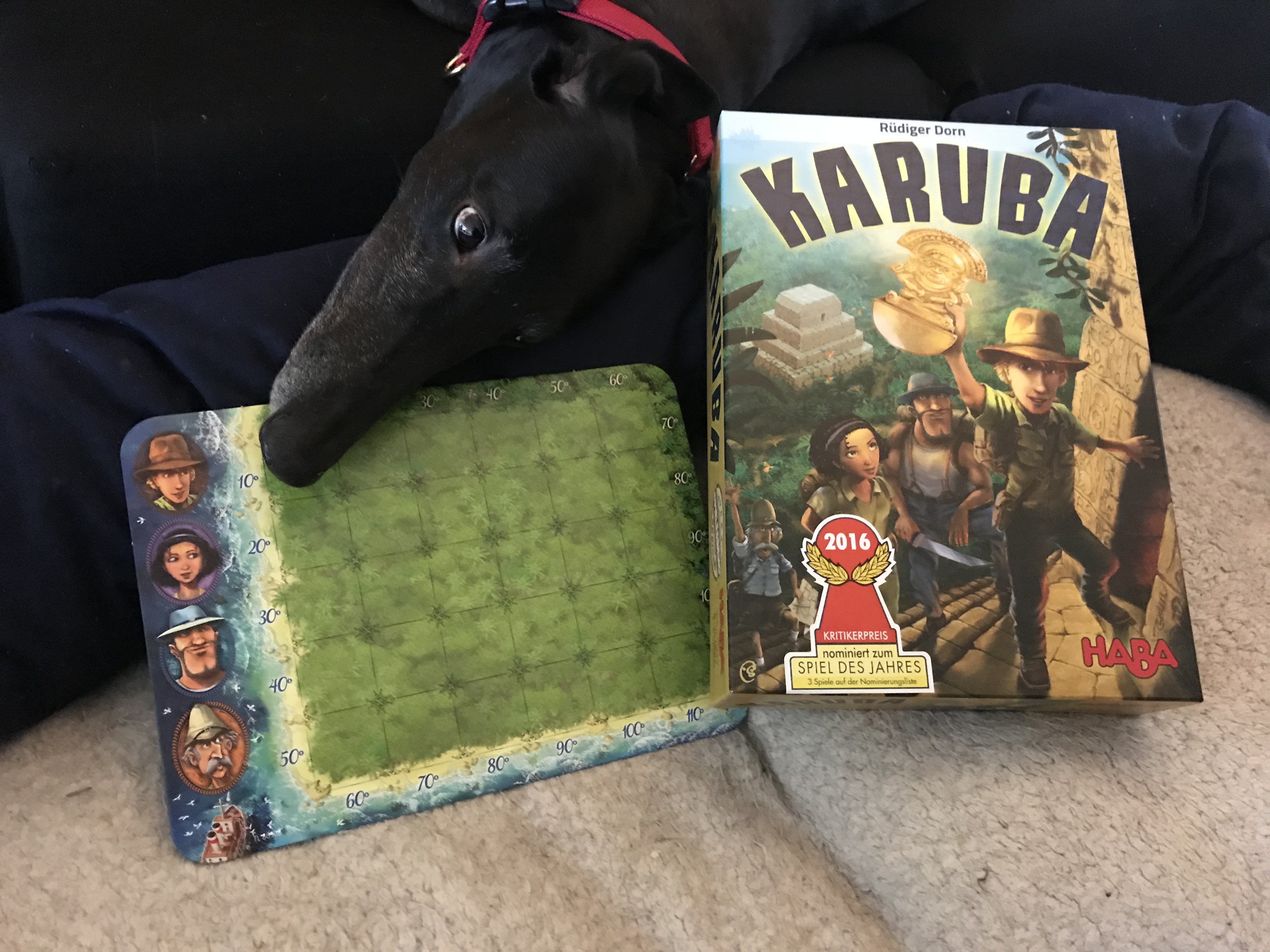
How to Play
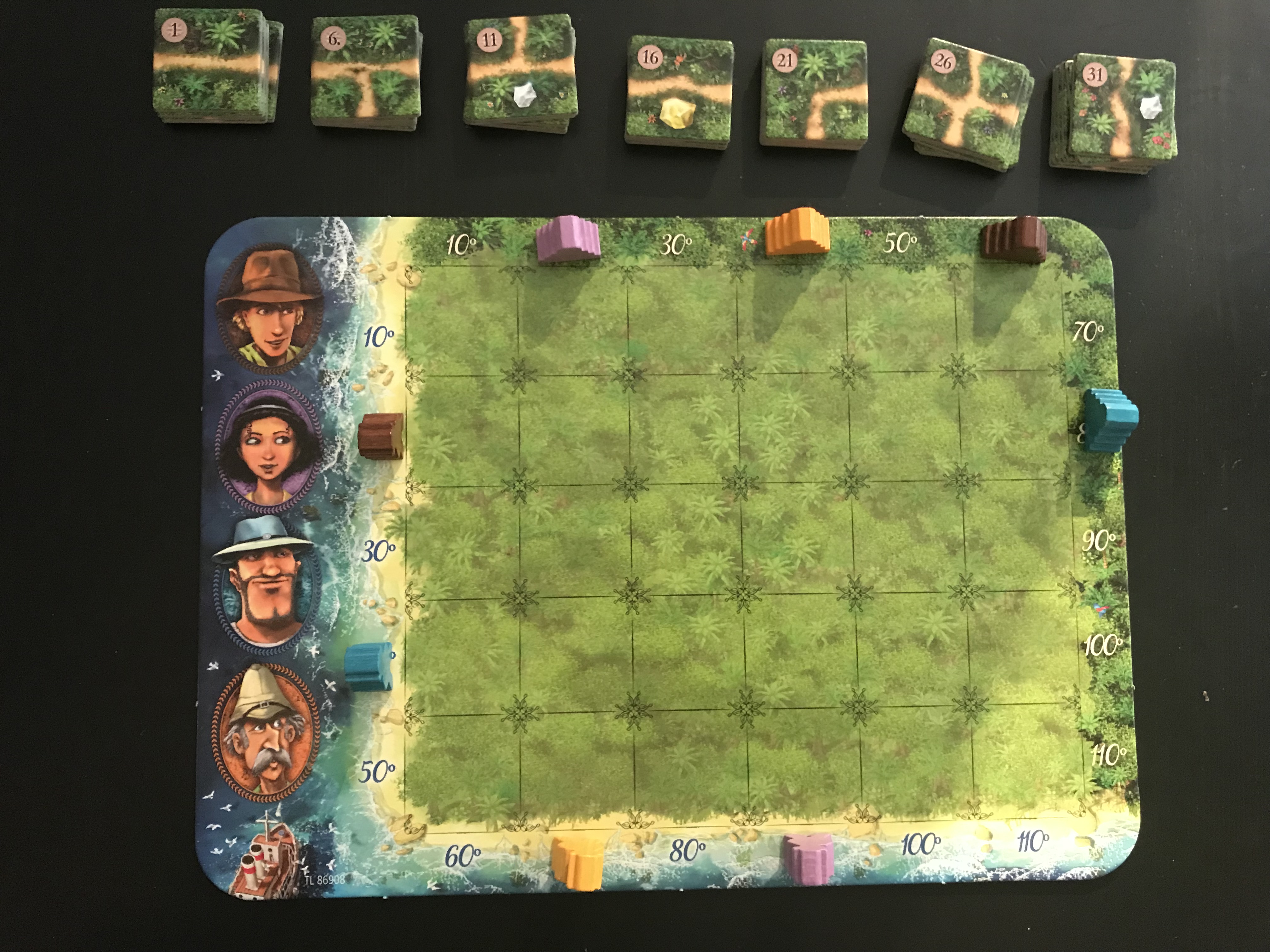
To play, each player takes their own jungle board, four adventurers in the four different colors, four temples in the four different colors, and a set of jungle tiles numbered 1 to 36. The treasure tiles are then arranged by color and placed in stack of descending order, highest value on top and lowest value on the bottom, within reach of all players along with the clear and gold plastic tokens. For 2 players only the 5 and 3 valued treasure tiles of each color will be used. For 3 players, the 5, 3, and 2 valued tiles are used. With 4 players, all of the treasure tiles will be used. Players then cooperatively decide where to place the adventurers and the temples with a few rules. Adventurers must be placed on the coastline, left and bottom edges of the board, temples must be placed in the jungle, top and right edges of the board, and the adventurers must be at least 3 numbers distance, ie three spaces on the grid, away from their corresponding temple. The players take turns calling out an adventurer and their temple’s location. All other players will place the same adventurer and temple in the same location. This continues until all adventurers and temples are on each player board and every player board looks the same. One player, the leader of the expedition, will shuffle their jungle tiles in a face down stack. All other players arrange their tiles around their individual player board in order to easily access each numbered tile.
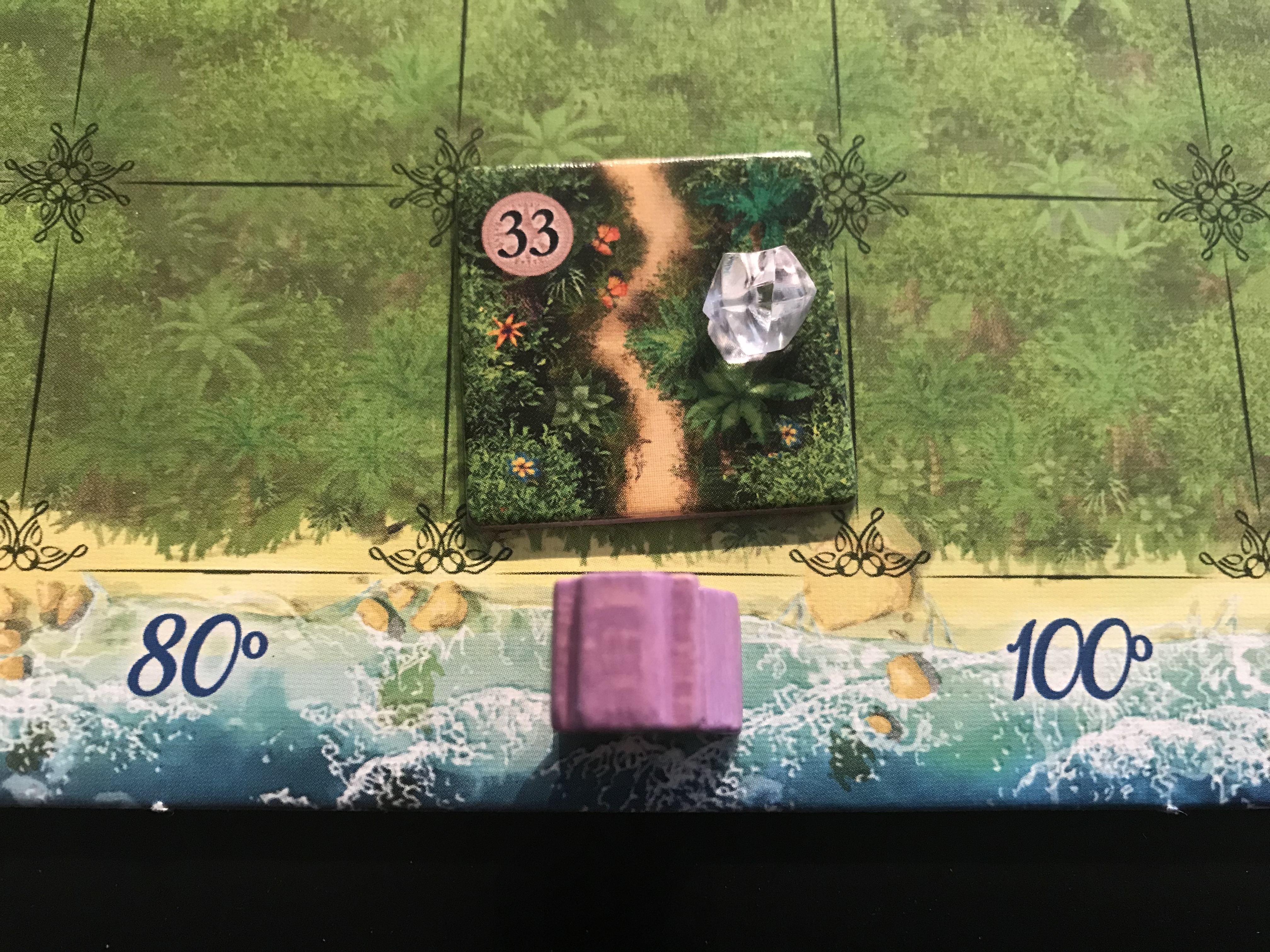
During the game, each player only has control over their own player board as they try to navigate their adventurers to the corresponding temples. Each turn, the expedition leader draws the top tile from the face down stack and calls out the number on the tile. Each player takes their tile of that number and can do one of two things: place the tile on their grid or discard the tile to move an adventurer. Tiles can be placed on any open space on the player board’s grid but the tile’s number must be in the upper left hand corner of the space. Players can not rotate tiles. If the tile has an open space for a clear gem or a gold nugget, the player takes the token from the supply and places it on the tile. If the player decides to move an adventurer, the tile is discarded and the player moves any one adventurer a number of spaces equal to the number of paths along the edge of the tile. For example, a tile with a T-junction will move an adventurer 3 spaces.
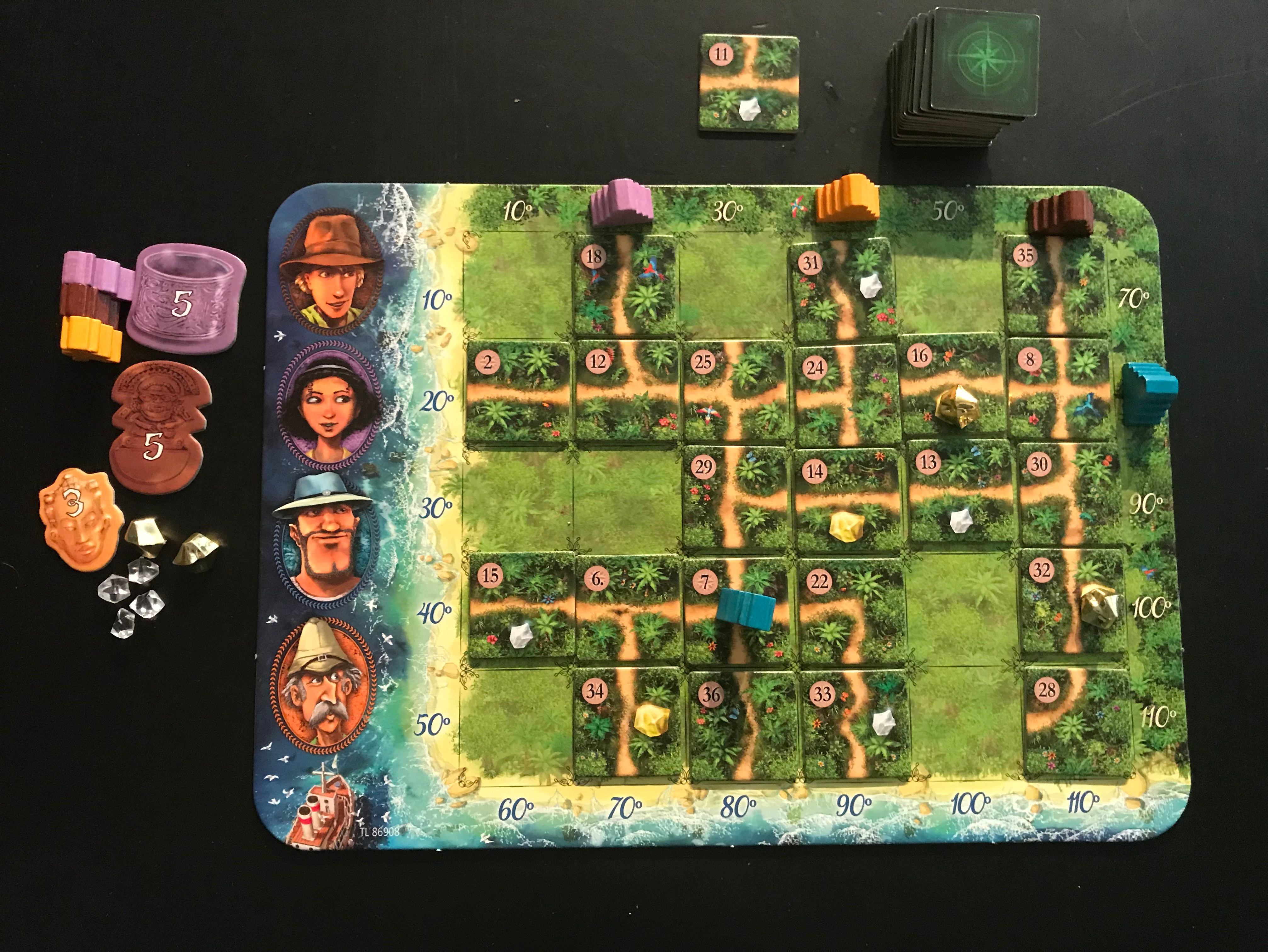
Adventurers must follow the path laid before them, can collect any gems or gold they pass along the path, and cannot share a space with or move through another adventurer. If an adventurer is able to exit their grid at their temple, ie yellow adventurer reaches the yellow temple, on their move, the player takes the best available treasure in that color. If two or more players reach the same color temple at the same time, one player takes the best available treasure and the other player(s) take the next available treasure tile(s) and takes a number of gem and/or gold tokens to cover the difference. Play continues until a player has reached every temple with their adventurers or the expedition leader’s draw pile depletes. Players then count the number of points earned from treasure tiles, the number of clear gems each worth a point, and the number of gold nuggets each worth 2 points. The player with the most points wins.

Review
I usually don’t agree with the Spiel des Jahres awards. Every year I feel like one game gets snubbed or another game wins that didn’t deserve it. Karuba was nominated in 2016 and lost out to Codenames. Codenames has the mass market appeal as evidenced by USopoly printing of every sort of fandom but Karuba works better as a family game and should have won that year. I usually play one of the Spiel nominated family weight games and my reaction is one of three things: I don’t like it, it’s fine, or I’ll play it again later. I expected the same out of Karuba when we tested Heather’s library copy. I read through the rules, I thought, “seems simple enough,” and started playing. After it was over, I just stared at my board I wonderfully screwed up as I left an adventurer in the middle of the jungle. I stared and thought, “this is one of the best games I’ve ever played.” It’s just so simple and you think that it only gives you two choices: place a tile or move an adventurer. Karuba’s mechanisms turn an easy yes or no question into an interview that exposes your deep inner thoughts. Everybody’s board will be different at the end of the game even though each player received the same tiles in the same order with the same starting position. Play a game of Karuba with your family or friends and you can see what kind of person or player they are. Are they trying to keep options open for their adventurers, rushing one adventurer to their destination at a time, or are they maniacally stranding adventurers in the jungle with dead ends and winding paths? I always want to compare boards after a game. It helps to improve your next play or create a narrative dealing with why the purple adventurer is trapped in the foliage forever.
I usually don’t enjoy fast and simple games like this. The box says it plays in 30 to 40 minutes and I would say most of that is set up. In my opinion, Karuba should be on the list of gateway games to attract new players to tabletop gaming. It plays quick, it’s easy to conceptualize the end goal, it gives the player a deceptively large amount of choices, and it is extremely easy to teach. The game is so simple in design that it can be taught to anybody. As a gaming curmudgeon, I usually don’t ask to play a family weight game. I will make excuses to not play a Dominion or a Ticket to Ride or I will suggest a more complex game with similar mechanisms. I will always play Karuba. Ask me and I will go to your house and teach you Karuba. It is one of my top, if not my top, family weight game to teach.
 Greyt Games